In The Swing?

To have a break in your workflow of two months can be significant. I had completed several photo shoots and was planning on having a joint exhibition with my good friend Will Lake and then the ankle thing happened. You are left in the situation of not knowing when and how capably, you would be able to return to work. For six weeks, I barely took a single photograph. I tried macro, product, still life photography in and around the house but it didn’t really meet my needs. To be honest, I never thought I would have been so patient with myself during this period. Then the cast comes off and you begin walking again. Six weeks on from that moment, I am now walking albeit slowly. I can drive and get up and down small flights of stairs. I have got back into taking my mixture of landscape and urban photography.

I am loving using the Nikon Zs. All the picture quality of the fabulous DSLRs but in a smaller package. There are compromises (evf instead of ovf, poor battery life) but the positives outweigh the negatives. I’ve toyed with swapping one of them for a Z7 but do I need 45.7mp? The detail I get from my z6 and z6ii is more than enough for sharp, good sized prints. I have seen many professional photographers on YouTube, recently heading over to Hasselblad and Leica Q3. Beautiful cameras with stunning optics. The detachment from many photographers both professional and amateur however, seems to be increasing. You are told by some of these photographers, that sensor size and megapixels don’t matter. It is a bit like an owner of a Ferrari telling another motorist, that your car model doesn’t matter as they all get you from A to B and after all we have national speed limits.
Don’t get me wrong, I would love a Hasselblad but it’s never going to happen. I know many of these professionals have put the hard work in over the years and they do an awful lot of good teaching those getting into photography. If a camera company wants to reach out and give equipment to photography YouTubers , I fully understand why.
I am proud of my work and think it has improved with time and hard work but how can I be sure? When a fellow photographer tells me how much they like my work, is it said in a way that equates to ‘good for you’ and ‘well tried’? Am I really nothing more than a budding semi professional who has a way to go to reach a level of quality not yet reached.
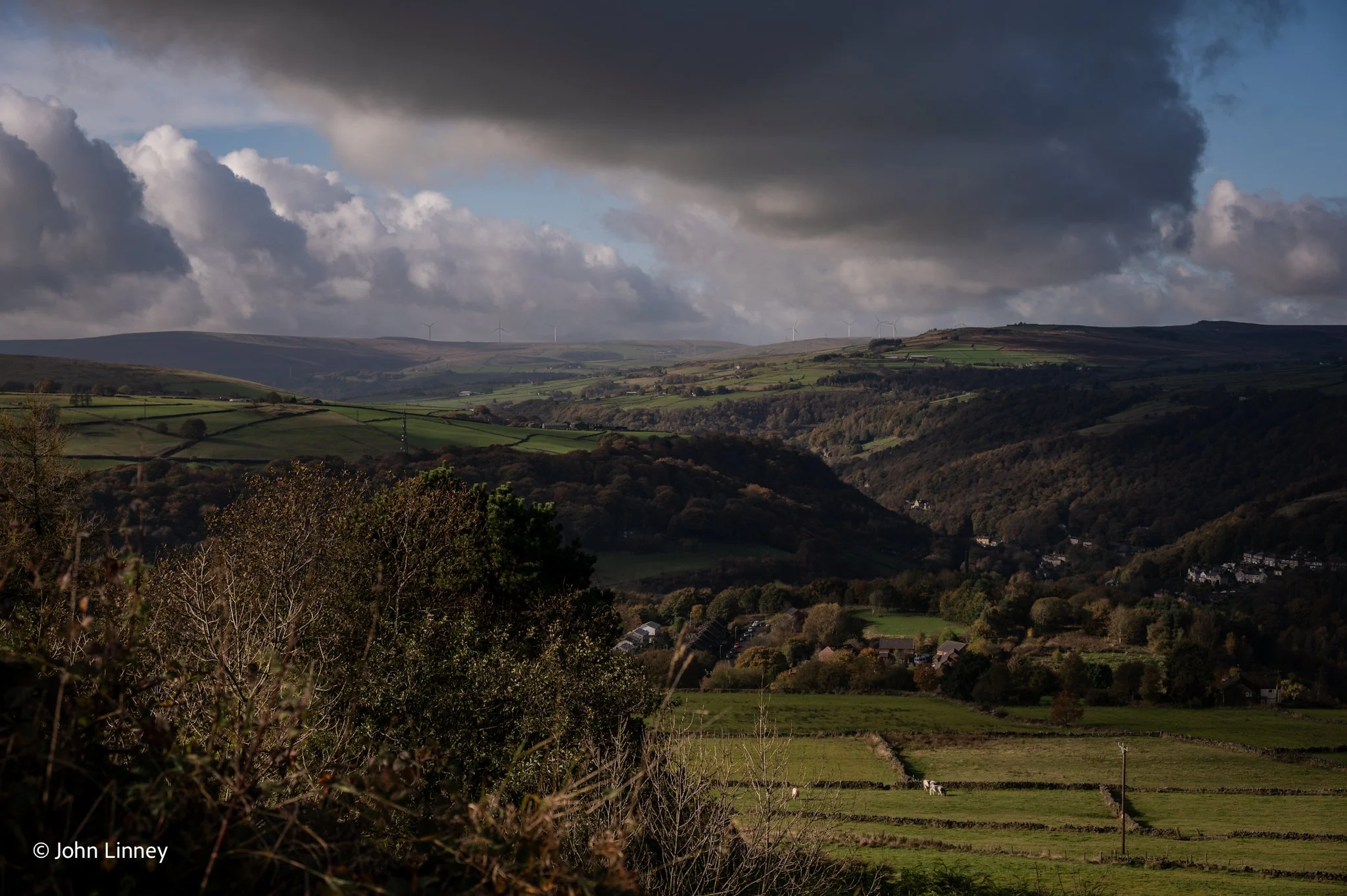
I am loving getting back into my routine again. I need things to do and work to set up. My selling of prints has taken a back seat of late but I plan to pick that up again. The exhibition has been rescheduled for February 2025. I shall be contacting my prospective clients who booked shoots but because of my broken ankle, have had to wait. I am out of practice writing about my work too. My social media posts aren’t as erudite as they once were. I have written poetry and fiction on and off for years but it’s as if this ability is lacking at present.

The photography, the business, the writing are all works in progress. A broken ankle doesn’t make you a bad photographer or poor businessman. My literary ability isn’t physically connected to my leg but maybe there is a connection, lack of confidence. I am wary when out walking. I’m terrified of falling or slipping. I have to re-learn how to mobilise confidently, how to trust my balance and strength. This level of doubt creeps into other aspects of my life and given that my photography is so integral, it’s bound to affect this. None of this means I will give up but it just makes the journey a little bit longer and tougher. To those reading this, I have plans and see this recent setback as purely that, a setback. It isn’t a roadblock or ‘sign’ that I’m making a mistake. Please hang in there and I’ll be back in form soon!

Gibson Mill.
Gibson Mill near Hebden Bridge is like a film set. It is much photographed, in all weathers, at all times of the day and evening. It sits below Hardcastle Crags, next to Hebden Beck which would have originally been the source of power for the mill. The estate including the mill, was donated to the National Trust by Lord Saville in 1950.

It is a regular spot for me and my partner to visit. Given my current situation, it also has limited disabled parking spots which enabled us to actually get there! Autumn is probably my favourite time of the year for photography and the estate and mill look fabulous, particularly on a sunny autumnal day. I travelled light, taking my Nikon Z6 II, two Viltrox primes and an adapted Pentax 100mm f2.8 vintage lens. The three primes covered the focal range from 20mm to 100mm and still I had to work for the shots.

I could have taken the 24-120 with the FTZ II adapter but weight was important. Even though I have become accustomed to shooting with large DSLRs, I am still taking it steadily using a single crutch so excessive weight unbalances me. The Z6 II and a small prime is roughly half the weight of my D700 and 24-120 lens. It makes you wonder if going fully mirrorless is the long term goal but I love shooting with DSLR cameras.

You go all in with a camera manufacturer and it has many benefits. Batteries, menu systems, lenses (even if adapted) all sync and you choose the camera for the look it produces. The D810 has more megapixels but also a different look to it than the Z6 II. The D700 is like no other camera I have ever used but the operational essentials are Nikon. I know my restriction is temporary and I’ll be back shooting with the heavier gear soon but until then, I am more than happy using the mirrorless camera. I went from film to mirrorless, only discovering the joys of it a couple of years ago.

Ultimately, It doesn’t matter what gear you use, It is down to the landscape/subject/location you are shooting. Gibson Mill is a joy to shoot at. Combine that with great company, excellent weather and decent accessibility, It proved to be worth the visit.
Return.

It’s been a while. In relation to my normal shooting schedule, it has been a positive lifetime. Many photographers will plan shoots and maybe go once a fortnight to do a specific shoot. I’m not that guy. My normal is 3 times a week in different locations. As I’m lucky enough to live in a spectacular part of the world, there is plenty of opportunities on my doorstep.
This was the case up and till the 2nd August this year. My accident and subsequent recovery has taken its natural course for a broken ankle. I’m now two weeks into using a boot and can now drive. This has opened up a whole heap of possibilities for me as a working photographer. I’m still a few weeks off returning to regular shoots and a couple of months walks and shoots.
The photo above was taken at my favourite lay by above Hebden Bridge. I’ve captured this view of Stoodley Pike so many times but this one felt special. I was able to drive myself up to the spot and take a photo standing unaided.
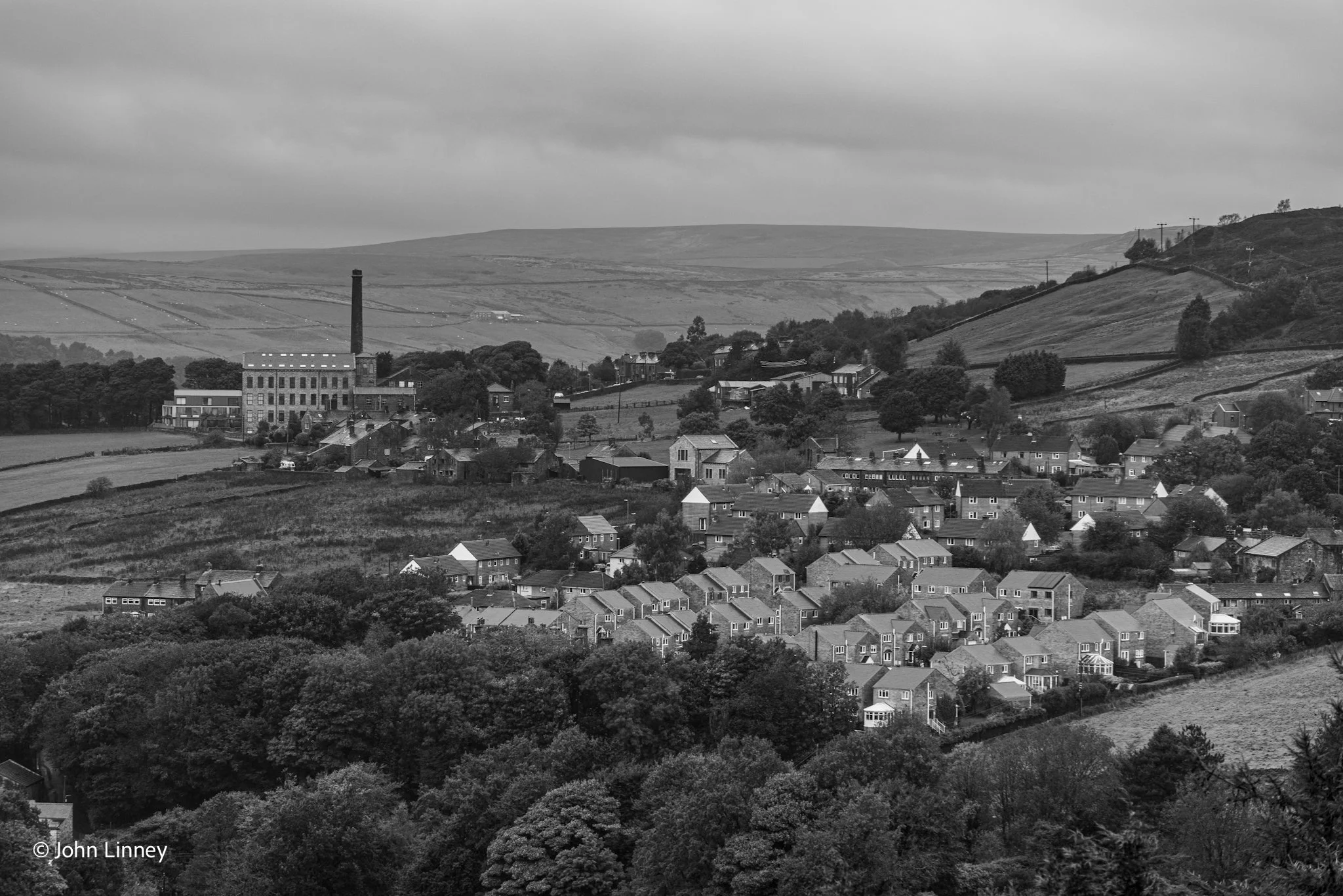
I’ve posted a couple of times about my recent experience, the frustrations I have had and ways of working around those. To be able to go out and take photos of the valley, moorland and towns is immensely satisfying. You know a complex fracture isn’t the easiest thing to deal with and part of that is working out how. The health professionals give you loads of support but you don’t always know if you’re on track with a full recovery. There isn’t really a timeline as every fracture is different and we all respond differently. I have never broken a bone before so have no frame of reference.

What is great is that I can start to think as a photographer again rather than a patient. I am still a way off a full recovery but I’m getting there. I can stand and hold my cameras again and use them in a way I am comfortable with. I can look at a landscape or building and see how light or cloud interacts with it. I was interviewed this morning for a magazine feature and it felt really good to talk about my photography rather than my ankle. I am loving using the Nikon d810. It’s such an intuitive machine and does exactly what I want it to. My images will improve as my mobility returns but I’m capable of doing this wonderful camera more justice than I have in the last couple of months. I want to take my d700 out and play with that as it is truly a one off in the world of digital cameras. All these monochrome images are taken with the d810 as I prefer to shoot the d700 in colour ; mainly because the sensor renders colours so beautifully, it would be a shame to deny it the chance to shine.

It feels like a return but not a full blown one. That is good enough for me right now and to not have to talk ankles or using crutches will be a relief. I can’t recall how many times I have had to explain how it happened and to have to relive a moment I really don’t want to. For the first few weeks, I experienced a sort of ptsd every time I thought about my accident. I am better now and don’t have the same reaction but you meet so many people who don’t know how it happened so you have to recount the story. I’m much happier to talk about photography and cameras with people.
Does Size Matter?

The image above was taken with a 36.3mp camera. That is as big a sensor I have ever owned. By modern standards, that’s a middle of the road sized sensor, given that many top end full frame cameras are at 61mp and medium format cameras at 100mp. I bought the camera partly on reputation and also that it was a very good deal. The 36.3 mega pixels, allow me to crop my image quite considerably and still retain a decent file size. The question is though, does it make for better quality images than say a 12.8mp camera from the same manufacturer?
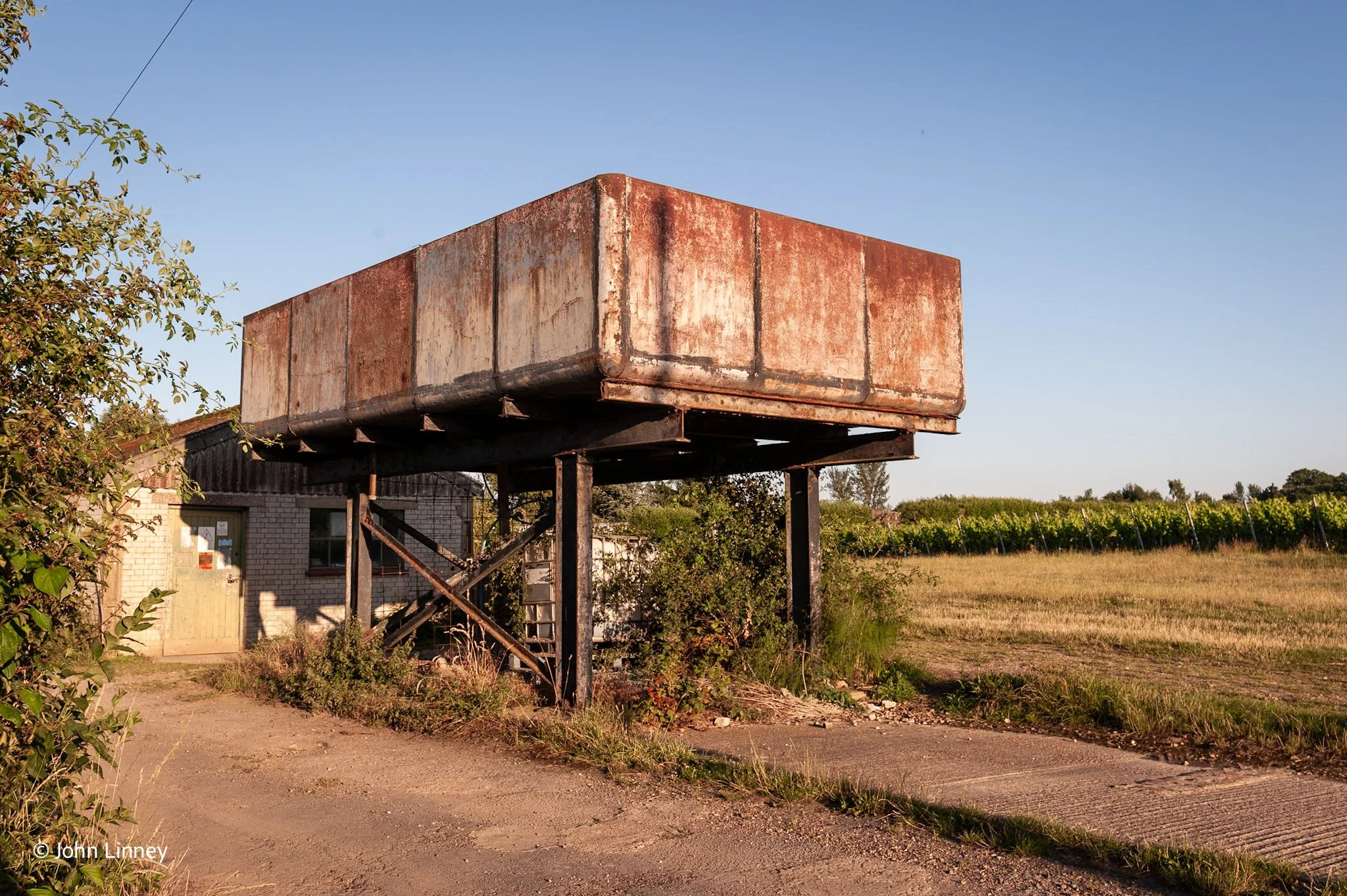
I have Nikon cameras ranging in sensor size from 12 to 36 and I’m not entirely sure that the number of pixels, determines the quality of image. There doesn’t seem to be an exponential growth in quality, the more mega pixels my camera has. I have more scope to crop with a bigger sensor but do I lose anything at the same time. My Nikon d700 (that took this image above) is a very interesting camera in the Nikon pantheon of cameras. Nearly every modern digital sensor is made by Sony by way back when Nikon designed the d700 and d3 cameras, they went to Matsushita (a branch of Panasonic) to supply the sensors. This resulted in two models that render light and colour very differently to most other digital cameras. It’s a big heavy camera that is a professional grade camera and a joy to use.

The image above is from a Nikon d750. This is a 24mp DSLR and 24 is often described as the sweet spot of pixels and full frame sensor format. It has more in common with my 36mp Nikon d810 but is smaller and marginally lighter. It handles low light as well as both of the others and is rugged and a pleasure to use. The delight of these Nikon cameras, is that they are all very reasonable and professional grade gear. They do create slightly different looks but none have a particular edge over the other. The lack of megapixels in the d700 is made up for with an extraordinary filmic quality of its images. The d810 produces highly detailed images that allow the photographer to crop at pleasure. I like to use a 5:4 crop (pretending it’s a medium format image I subconsciously assume ?) .
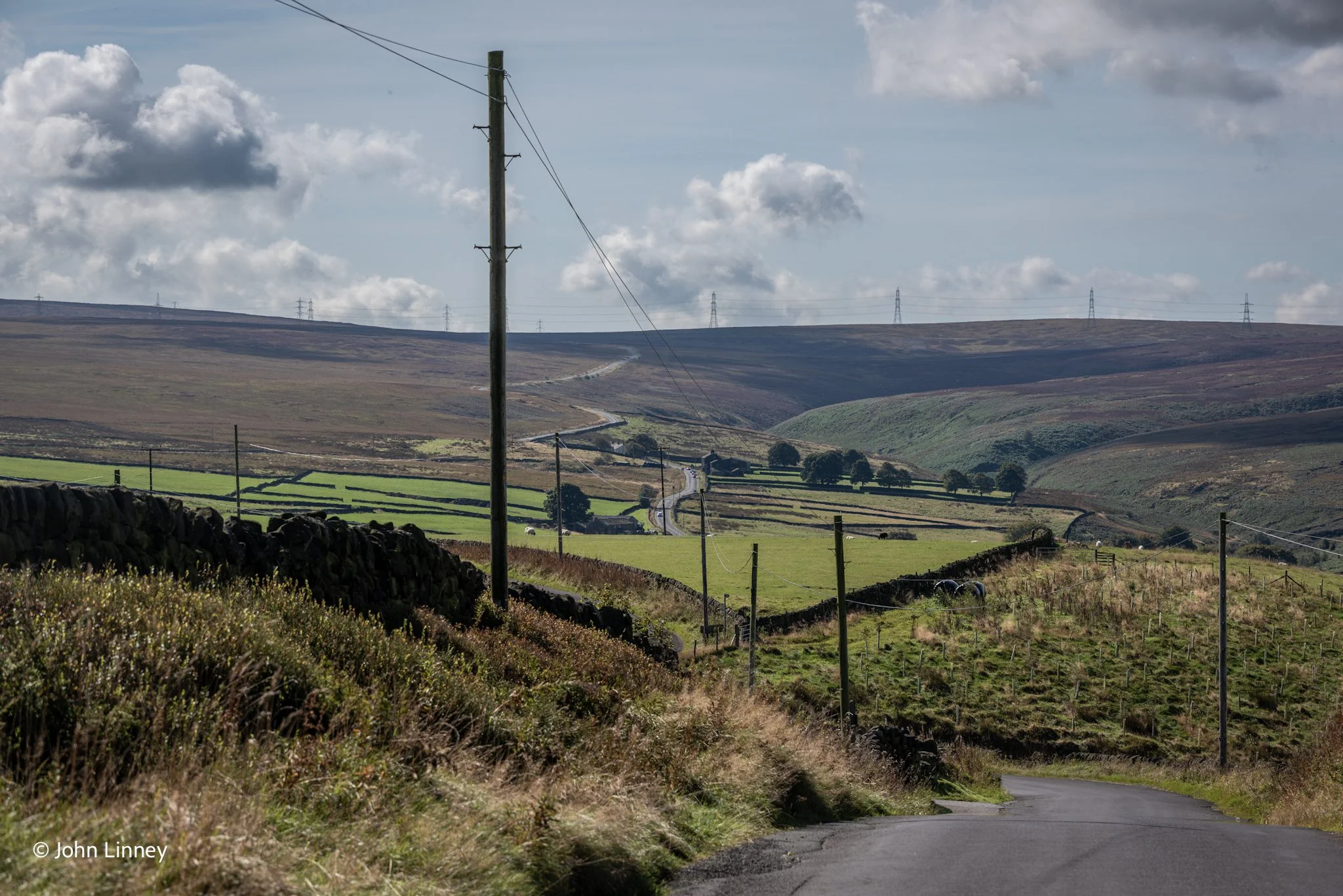
I like to have several bodies that I can use for different purposes. I like the option rather than doing everything on one body. I’ve recently sold all my Panasonic gear and got a very cheap Nikon z6, to use mainly for street photography. For my photo shoots, I’ll probably use the d810 and d750 as they are good for portraits and in low light. The d700 is my indulgence. I love it because it does something the others don’t.

Does size matter then? Not really is my conclusion obtained from not very exhaustive research. I’m happy using Nikon cameras, lenses and that seems to be the common denominator. I can share batteries among 3 cameras, lenses over all 4 and a menu system common to all. It makes life simpler and easier to switch from model to model. How many megapixels is not my primary thought but having a range does help.

Keep On Keeping On

Week three of my enforced quarantine.
I have spent the last 6 years going out taking photographs at least once if not twice a week. Everywhere I go, my camera bag is in the car or on my back. It feels alien to not be going out, to not be able to go out but I understand the situation I’m in. This time has allowed me to revisit images both recent and some from my archive of photographs. I’ve edited them with darker, more dramatic effects. I’ve gone for softer dreamlike styles. Because the limit of my world at the moment is the garden and that has been only achieved today; I recognise my creative limitations.
I go through a whole gamut of emotions each day. Mostly, these moments are fleeting and I quickly talk myself out of feelings of despair, regret, a sense of foolishness for getting injured in the first place. We all get injured at some point in our lives but it’s how we adapt that helps us keep going. I feel a wave of disillusion coming over me and straight away, I tell myself this is temporary, this won’t be forever. I feel frustration and take a moment to stop and think, I can overcome these obstacles. I am grateful for the little victories I achieve, thanks to the help of my partner and my family. I can’t allow myself to feel self pity because that helps no one especially me.

As a photographer, I look for new opportunities, new angles, how to work within the confines of my current state. How can I create when I can’t just walk out the door and go and taking photos. I hope to do some still life studies, some domestic photos that document my lived experience. Making the most of what is around me should be the best I can do.
My forthcoming exhibition with fellow photographer Will Lake has been postponed until such time that I can hang my prints on the walls of our exhibition space and spend the weekend in that space. It was hugely disappointing to reach the decision to postpone but it’s the right one. I need to concentrate on recovering and regaining my mobility.

Now is not the time for giving up, resigning my career as a photographer. I have spent the whole of my adult life doing jobs, gaining qualifications that didn’t really sit easily with me. I was good at them (or so I’m told) but they didn’t light a fire in me. Picking up a camera and capturing moments in time does that. It is what I am not just what I do. Why would I turn my back on the thing that partially defines me? I have much to learn, many techniques, creative ideas to discover.
Using my Nikon cameras is a joy. Both my D700 and D750, bring the joy out in my work. Yes, they are just tools but they make me want to take photos, to explore what is possible. I still have my Panasonic S5II which I use for photo shoots but I will introduce the Nikons to that part of my job. I have jobs lined up with very patient clients for autumn and winter. My artist studio shoots are great fun and I love working with other creatives, capturing them doing what they love doing.
I believe in what is yet to come. I love my work and want to carry on for many years to come. It’s taken me 40 years to find the creative purpose and I’m not about to leave it be. Watch this space because there’s more to come!
Who Needs Megapixels?
Modern digital cameras have in recent years, created a false narrative regarding picture quality. The belief that the higher the megapixel count, the better the camera. The norm only 6 years ago would be 24mp for a professional or enthusiast model but now, that is considered low for professional use. Photographers convince you higher megapixels means better image quality and gives you the ability to crop more. I beg to differ. All the images in this post are taken with a professional DSLR that has 12.8mp. Ok, this is a blog that you’ll probably read on your phone or tablet but bear with me.

Megapixels are not the be all and end all of determining picture quality. High megapixels can bring problems as well as benefits. The sensor in a Sony A7RV is the same physical size as my Nikon D700. The Sony has 61mp and my Nikon has 12.8mp. This means that over four times the number of pixels are crammed into the same physical space as the Nikon. The amount of noise you encounter in low light is potentially higher in a high megapixel sensor because of the density of pixels. The more room you give to the pixels to read the composition, the better it can handle noise. Sony cameras have very sophisticated processors that compensate for that but that in itself creates issues with the eventual image.

The ability for a high megapixel camera to crop is undoubtedly an advantage. This however can lead to a certain laziness on behalf of the photographer. If you use only one lens and rely on the ability of your camera to crop heavily, you’re not necessarily thinking about the eventual image. A modern trend is to limit yourself to one fixed lens and work the scene better. It requires you to think about your composition more because your focal length is restricted. If you have a camera that can capture a larger scene that you only intend on using a fraction of, why not use your legs to get yourself in a better position to capture it in one? Some of these images are taken using the Nikon 24-120mm f4 lens so I am falling prey to to the easy route but the eventual composition is less crop-able because my cameras megapixel count is much lower. I also found that despite using a zoom with a broad range, I also used my feet to get the right shot.

My other two camera bodies (Nikon D750 & LUMIX S5II) are both 24.3 megapixels. They allow me a limited leeway in cropping for the finished image. They are both great cameras and I wouldn’t be without them but here’s the thing. The Nikon D700 is an awesome piece of equipment. The sensor in this camera was designed specifically for this model and the Nikon D3. Most digital camera sensors are made by Sony but the D700 and D3 are designed and manufactured by Matsushita, a subsidiary of Panasonic. They handle colour, depth and low light differently, in a way I have never come across before in my extensive personal history of camera ownership. The low light performance is stunning for a 16 year old camera. Some images can have an almost 3D effect. It is heavy, clunky and has only one CF card slot but the autofocus is quick and reliable and shutter sounds great. You feel like a professional using one which may sound a tad superficial but it does give you a sense of what you’re about when out taking photographs.

I really love my D700 and am using it professionally to produce good sized exhibition prints. I’m not saying ditch your 36/45/61 megapixel camera for a 12 because there’s so much more to using your camera than that. What I am saying is, don’t be wary of using older lower megapixel cameras if they suit your needs. I used 16mp Fujifilm cameras for several years and they produce beautiful professional results but now I’m a Nikon guy. The camera bodies are rugged, very nice to hold and backwards compatible to a legion of superb Nikon/Nikkor lenses. I would highly recommend you try a D700 as you will enjoy the experience of using it but most of all, be ever so slightly mind blown by the results it is capable of!
Travels and Travails.
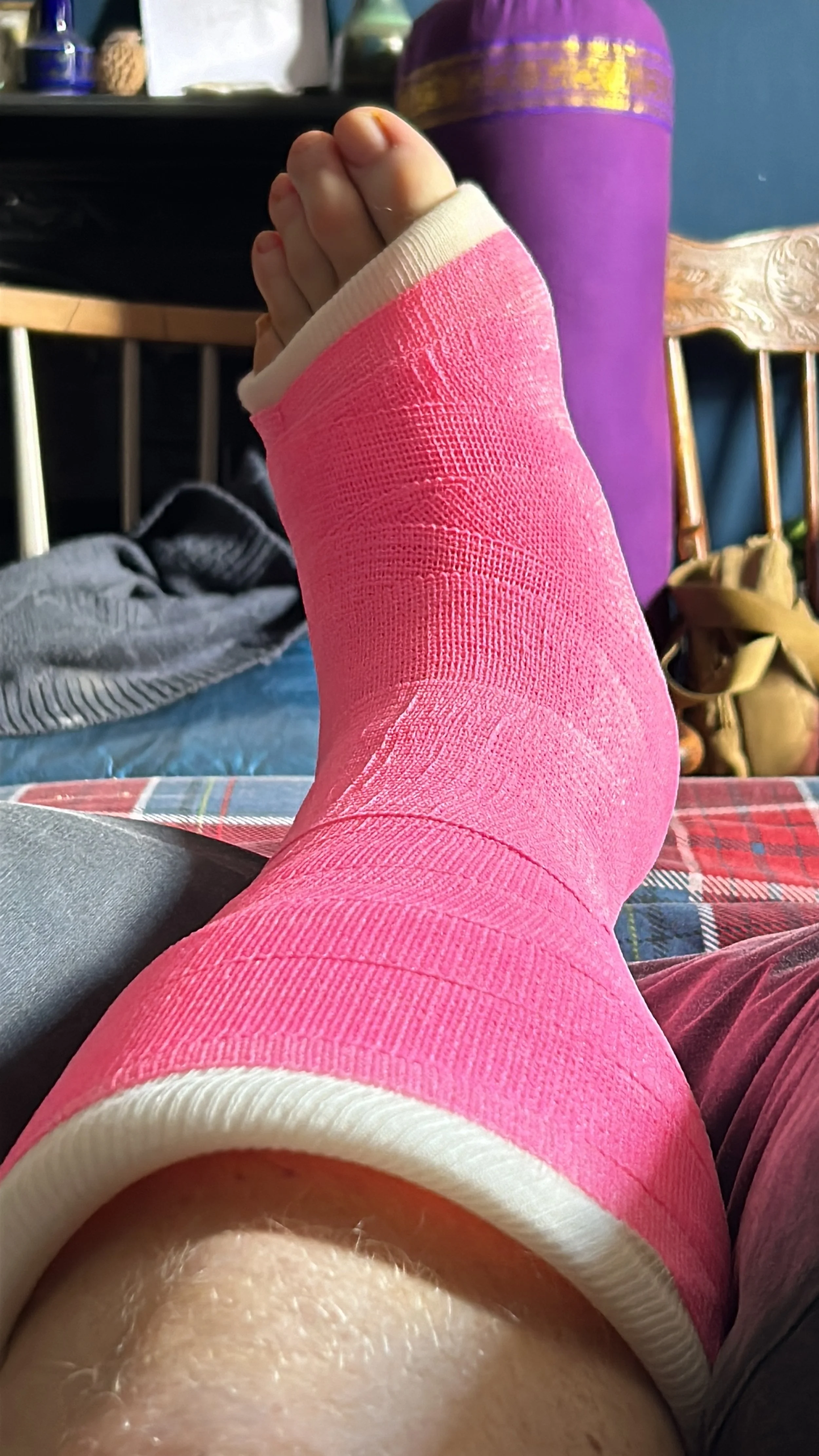
Our summer holiday in Kent has proved to be an eventful one. I’ll start at the end which may sound weird but bear with me. Last Thursday, I managed to break my left ankle after an innocuous slip down a grass bank. I now sit here with a bright pink cast in my lower leg , catching up on rest that I didn’t really get in hospital. So that’s now, what about before ?
Our visit south was a fabulous fortnight in fabulous surroundings and excellent weather. Photographically, it was an opportunity to use my Nikon D750 and a new old classic, the Nikon D700. The D700 is a relative dinosaur having first been introduced in 2008. It’s a 12.8mp full frame professional camera but that does not tell you much. It has a sensor unlike any camera released since 2010 other than Sigma as it is built and designed by Panasonic (nearly all modern digital cameras have Sony sensors). It produces colours and textures unlike anything I’ve ever used.

You get clarity, detail, depth, a richness of colour I haven’t come across before. This image taken on Dungeness beach was taken with the D700. You don’t feel at any disadvantage using it and there is in some ways, an advantage to using a simple, reliable, solid performer. Its autofocus is very good, the optical viewfinder is bright and clear, the button layout is logical and useful. I’ve paired it with my existing Nikon g lenses as well as the brilliant Nikon AF-D 35mm f2 lens. I used the D750 on alternate days because I love that camera. I’ve become a real Nikon convert and a bigger DSLR fan than I was before the D700 arrived.

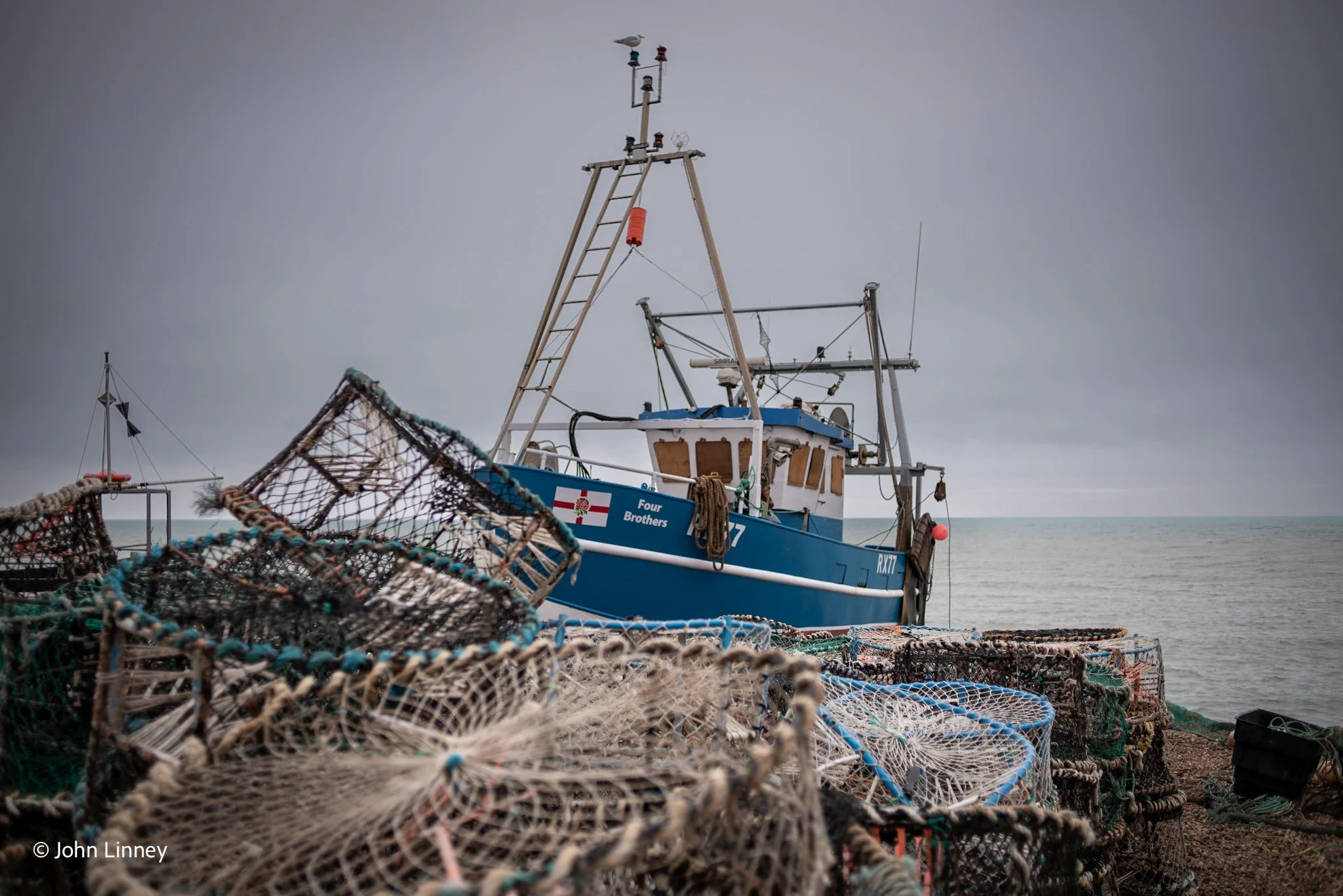
We have spent a lot of our holiday by the coast. Three specific locations, Dungeness, Hastings and Whitstable. All three are on the Kent coast and each has a unique feel to them. The photo above was taken on Hastings beach where the fishing boats are moored on the pebble beach with huge cables, anchors and sometimes diggers or earth movers! The old and new sit side by side with wrecks inhabiting the same area as working boats.
Dungeness is an almost other worldly environment. A huge shingle and pebble flat beach area running half a mile inland. The houses are mainly old wooden huts spread sparsely across the landscape, all in sight of two lighthouses and a nuclear power station. It has an eerie, bleak feel to it but it’s my kind of place.
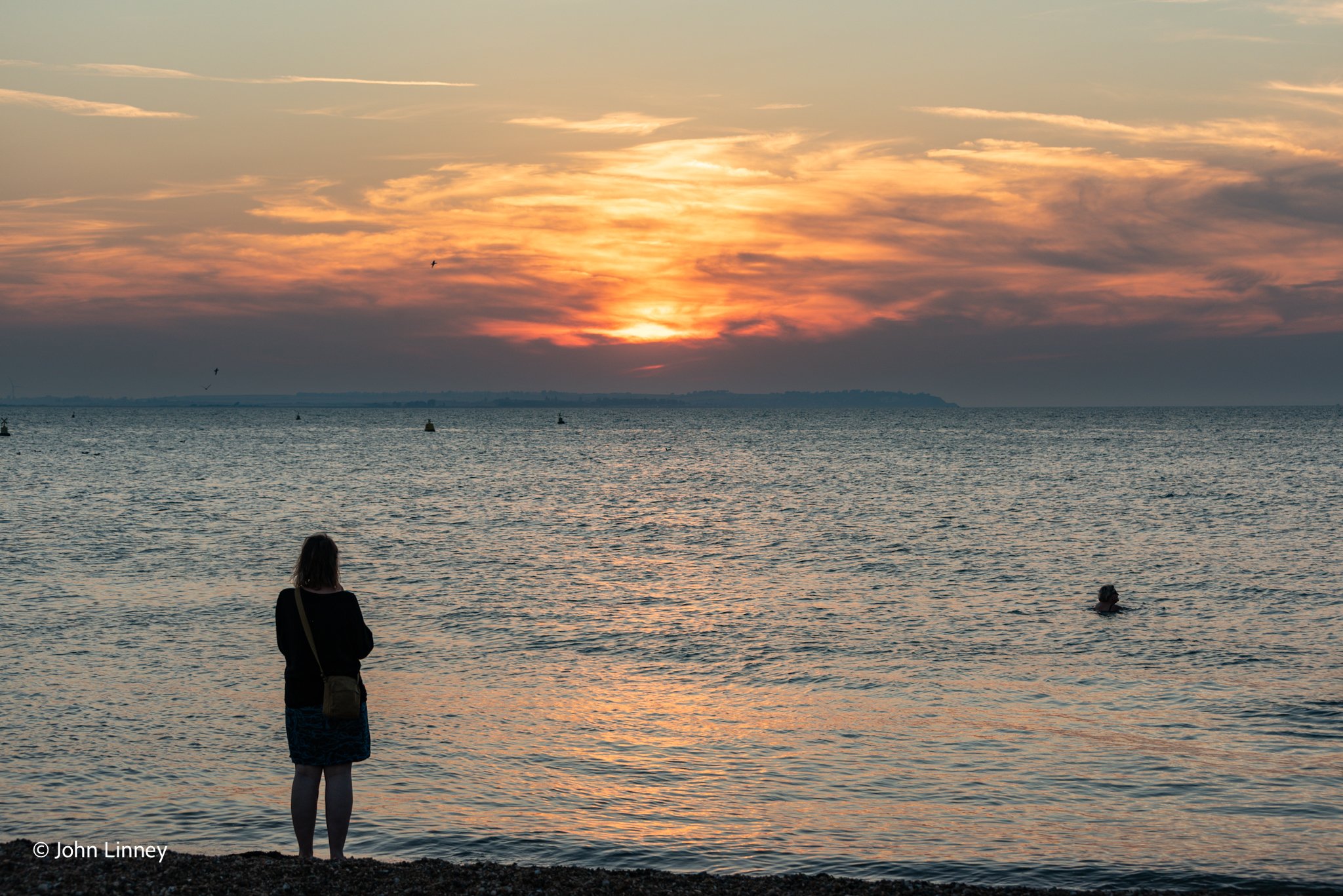
Whitstable is a fishing town on the north Kent coast. It’s famous for its oysters and the fishing huts lining the beach. The pebbled beach is divided by wooden groynes which dive deeply into the English Channel. The sunsets at Whitstable were as good as any Mediterranean one I have experienced.

Apart from the broken ankle and resulting problems we have experienced, our trip south was a joy. We really packed a lot in and to have my two Nikons with me, never felt at a disadvantage. I know I’m someone who has used all sorts of cameras in my time and has waxed lyrical about many, I enjoy using the Nikons because the do what I want them to do and do it really well. They aren’t new technology or high megapixel beasts but I can produce professional images for a comparatively low budget. They were real companions on our journey. As for me, I have several weeks of recovery, contemplating, planning and preparation for my next adventure. We hope to go to Scotland in autumn (ankle dependant) and I have an exhibition in a month.
In Awe
I recently did a post about unpopular camera brands where I made the case for those that went under the radar of some photographers. The big beasts of camera technology these days are Sony, Canon and Nikon. They dominate the professional world, making gear that is used the world over to produce much of our photographic content. They have all focused their attentions on mirrorless camera systems and are gradually leaving the DSLR behind. It is amazing to see how technology has moved on in the 10 years since the camera I am focusing on was introduced.

The Nikon D750 is a 24.3mp full frame DSLR introduced in 2014. It was seen as the prosumer model below the flagship D4 and D810. A good friend of mine and professional photographer Andrew Fowler, is a long time Nikon user. He owns this model and always rated it.
I have used pretty much every major camera brand apart from Nikon over the years. In the last 2 years, I have grown to enjoy using the ‘older’ technology of the DSLR . The optical viewfinder, the better ergonomics, the lightning fast start up time and of course, what some are capable of. This camera however has blown me away. It is the most comfortable, reliable, rugged camera I’ve ever used. It produces some of the nicest files I’ve ever seen. The detail it retains is amazing. The battery life is the best of any camera I have owned. The native lenses are superb and not expensive. It isn’t overly big and bulky. The grip is deep and moulds to my hand.

I bet you think you’ve heard this from me before. In fairness , I do tend to say this sort of thing ; but ‘sort of’ is the operative phrase as I’m trying to convince myself a purchase has been worth it! This Nikon was comparatively inexpensive and isn’t all sparkling new.

I have heard and read that camera technology has in some ways, advanced dramatically in the last 15 years and in many ways it hasn’t. A top of the line camera in 2010 is still a great camera if it takes great pictures and is reliable. It is around the edges that cameras have advanced. They make your life slightly easier as a technician but don’t dismiss the older models as they have something to offer. If I had been with Nikon for the long haul , maybe I would have seen how newer models improved the shooting experience and image quality. I had a moment the other week whilst using the D750. I was taking a few sunset photos , last of the light shots up at a reservoir high up on the top of the moors. I finished and put my camera back in the bag and said to myself “I really love using this” . That is a first for me.
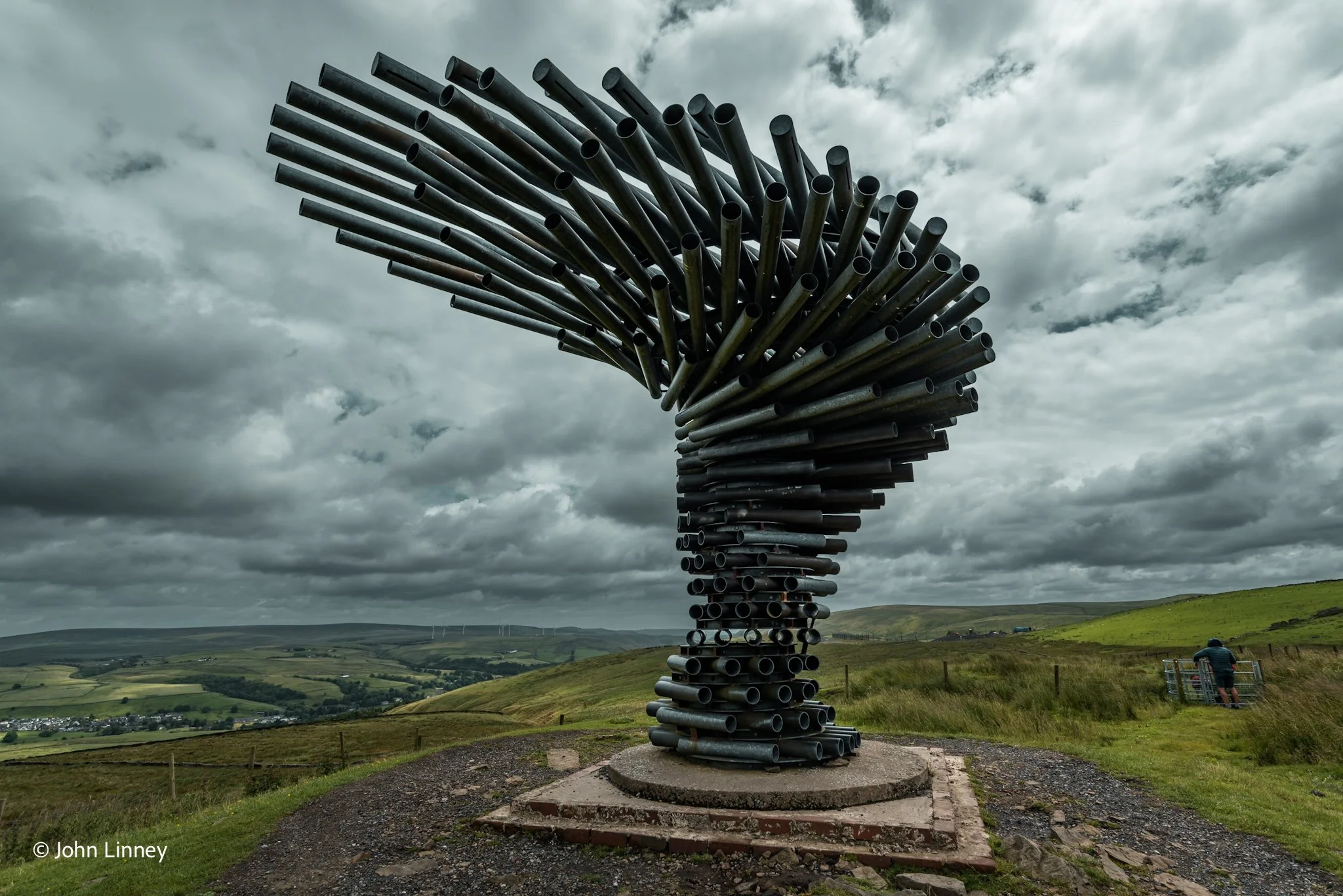
I’ve come to realise that camera body aesthetics don’t really count for much. I owned a Leica once and felt conscious that if I was out taking photos, people were looking at my camera rather than what I was looking at. That didn’t make my photography better, it just drew attention to the gear I was carrying. No one looks at a 10 year old DSLR because they think it’s yesterday’s technology. Taking thousands of images and learning from that experience, makes me a better photographer. Practice and time improves your photography. Having a camera that can realise my expectations is important but having one that exceeds them is a gift.

I am doing more photo shoots using my Panasonic S5II but I will also be using the Nikon as it may offer a little of the magic I’ve discovered in my general landscape and documentary work. I am told, combined with the 85mm f1.8 g lens, it is a great camera for portrait work. I know it’s excellent in low light and its colours are great. In conclusion, don’t write off older technology. They knew a thing or two about making professional equipment back in the day. Would I recommend a D750 ? Yes of course I would. Would I try the D780 or D850? Yes I would but do I need more bells and whistles ? Not really no. I am though, in a state of awe.

Unpopular Camera Brands

Lupin - Pentax K70 + Pentax 135mm f3.5
Reputation in the world of cameras, is a strange thing. It can build from having been a quality producer/manufacturer for generations. It can come from famous people endorsing the brand. It can come from a sense of self belief. You can however make top quality products that can equal or some times, out perform the popular ones and this goes unnoticed.
If you are a camera manufacturer, particularly one of the big three (Sony, Canon & Nikon), you appear to fail to see what any other camera brand is doing. You work at your own pace, introducing new cameras and lenses at your own speed. You endeavour to make the best product you can to appeal to your loyal fanbases.
The second tier of brands (Fujifilm, Panasonic, OM systems (Olympus), Sigma and Pentax) have to work harder to get the attention of professionals and enthusiasts. They have to show it’s feasible to switch from the big three and trust their products.
Then there are the top end manufacturers (Leica and Hasselblad) who produce high end very expensive and exclusive cameras and lenses. They can charge exorbitant prices for their products as they are hand made and carry a certain caché that commands a high fee.

Old Town above Hebden Bridge - Panasonic S5II + Pentax 28mm f2.8
Certain YouTubers, poke fun at the second tier manufacturers attempts to sell their cameras and lenses. It’s as if they have to compare themselves to the output of the big three in order to gain some degree of approval. They compare the latest camera or lens with one from the high three and ask you to wonder if it is as good as a Canon/Nikon/Sony equivalent. You have to match their standards otherwise, they don’t quite reach their lofty heights. Don’t get me wrong, the big three make some really beautiful cameras and lenses. They sort of deserve their positions as the go to brands but is it all smoke and mirrors? I have tried cameras from pretty much every main brand apart from Nikon. For a long time, I was a Fujifilm user and loved their quality cameras and lenses. I have used Sony, Canon, Leica, Panasonic, Olympus (briefly) and Pentax. I now shoot with Panasonic and Pentax. They do everything I need them to and are both more than able of producing top rate images to the limit of my capabilities (who sometimes makes a mess of things).

Nutclough Woods, Hebden Bridge Pentax K70 + Pentax 50mm f1.7
At one time, Pentax were probably the leading camera manufacturers in the world. Their cameras and lenses were the envy of most other brands. Nowadays, they occupy a corner of the camera market usually in the shade. They do however, continue to make top built, rugged, feature packed cameras. Their lenses render colour and detail beautifully and they have the added advantage of being backwards compatible with their lens mount. You can attach a Pentax mount lens from the 1970s to their modern bodies without an adapter. I think the only other brand that boasts that is Leica but correct if I’m wrong.
Panasonic Lumix make stunning, weather sealed cameras that out perform some of the big three as hybrid cameras. They are well known for their ability to make excellent video cameras. As stills cameras, they are criminally underrated. Some of my favourite shots were taken on Lumix cameras. They do the simple things well and make highly capable cameras and stunning glass.

Rochdale Canal - Panasonic S5 + Panasonic 50mm f1.8
However much you point out the excellent build quality, the feature packed camera bodies and lenses and the manufacturers desire to listen to its customers, the big three will always hog the limelight because that’s how they keep there. Ricoh Pentax , Fujifilm and Panasonic LUMIX tend to listen to users and introduce features that photographers have asked for. I’m not sure that any of the big three ever do this. They tend to approach photographers as customers who should be happy to receive whatever new innovations they have come up with and just be grateful for what they’ve got.

Quick Break Haifax - Panasonic S5II + Panasonic 85mm f1.8
I have ended up happily using two stellar cameras from Pentax and Panasonic. I don’t feel as if I’ve compromised in any way on quality by going with these cameras. I never felt as if Fujifilm were the poor relations of Sony/Canon/Nikon. Now I’m in the business of taking photographs professionally, I wonder if the camera I choose dictates my ability to work as a professional photographer? Results are ultimately what gets you work and I am trying to focus on honing my craft rather than what tool I use to perform in the craft. I use 40 yr old lenses that stand up to the latest and greatest advances in lens technology. I see this as a bonus afforded to me that the major players would sniff at. Would I like to own a top of line Sony camera or Nikon, maybe so? Until that day comes, I say give the also ran guys a chance. You may be pleasantly surprised!
Vintage

Panasonic S5II + SMC Pentax M 28mm f2.8
You know you’re old, when the word ‘vintage’ describes items that were made 20 years after you were born. technology moves at a pace these days hitherto not seen in the last 100 years. Camera technology and new models of camera body and lens are being brought out every year and with increasing levels of tweaking what is already there. Sigma for example, have released an update version of their 24-70 f2.8 dg dn art lens in the last couple of weeks. This replaces a lens created only a few years ago which was itself, considered excellent. Every camera manufacturer is forever updating their bodies and lenses to improve on what came before. I have the Panasonic S5II which replaced the S5. There was gap of a few years between models and the camera is a big improvement on what was a great camera.

Panasonic S5II + SMC Pentax M 28mm f2.8
‘Invest in good glass’ is a phrase photographers advise newbies into the world of photography. It is sensible advice and a good lens will make a good composition into potentially, a great one. What if the lens you are using is 50 years old though ? Did the camera companies know a thing or two about producing high end quality lenses back then? I have been user of old manual focus lenses for nearly 10 years now. To be fair, I used some of them when they were new releases back in the late 70’s and 80’s but that’s beside the point. The advent of mirrorless cameras and adapters have enabled photographers to experiment with film era camera lenses. I have tried a few mounts and different manufacturers in recent times. I am a fan of Olympus Zuiko lenses (beautifully made, generally very contrasty and sharp), Canon FD lenses good too but the manufacturer I always return are Asahi Pentax. Their SMC (super multi coated) lenses produced from the mid 1970’s to the late 1980’s are always my go to choice.

Panasonic S5II + SMC Pentax A 50mm f1.7
There is something about the process of taking a photo that is enhanced by using a manual focus lens. They make you feel more at one with your camera and the advent of focusing tools such as focus peaking, make capturing photos relatively easy. They can be quicker than autofocusing lenses as they don’t hunt for focus. You set the focal distance and everything will be in focus. Pentax made some lovely prime lenses back in the day. To be fair, they still make lovely lenses now but their film era glass have a certain quality about them. The colours are punchy but not lurid. They are slightly cooler than say Olympus Zuiko but attractive. The out of focus areas are very well controlled and you can get some beautiful bokeh with them. The biggest plus for a photographer however is the price of these lenses. The three focal lengths I use are 28mm, 50mm and 135mm. You can get a really good Pentax M lens in all these focal ranges for well under £40.

Panasonic S5II + SMC Pentax M 135mm f3.5
If you were to only use manual vintage lenses, you could have a complete lens kit (including maybe a 70-210) for under £150. That is half the price of a modern secondhand standard Panasonic kit lens. What you get for that money are high quality metal lenses with beautiful glass. Yes, in tests they don’t perform to modern standards but you learn to work around that. The double advantage for someone who also happens to own a modern Pentax DSLR is that these 50 year old lenses will fit your modern camera without the need for an adapter, That is a huge plus and I continue to take my hat off to Ricoh Pentax for that.

I still use my modern autofocus lenses on both my S5II and Pentax K70. Sometimes, I need their autofocus, their sharpness, their weather sealing. I love the modern lenses but I have more fun with my older ones. They can be unpredictable but that can also be a bonus. You get effects that you would otherwise not with a modern one. If you have never used vintage lenses, I urge you to do so. They are an affordable way of creating interesting photographs. Many filmmakers are now using vintage lenses to get a different, more creative look. I would recommend Pentax or Olympus Zuiko but classics like the Helios 44m. It is an amazing focal length lens, that produces wild swirly bokeh and pretty sharp detail. Get yourself an adapter to fit your camera body and choose according to what lens mount your vintage lens has. Remember to make sure your camera is switched on to shooting without lens. This allows you take a photo. You won’t get exif data but you’ll just have to remember that! Go and have fun and you might get hooked like me!
Start of Summer

It’s beginning to feel like Summer. I was never really a big fan of the season but in recent years, I’ve grown to love it. I embrace warmth, long days, sheltering from the hot sun in cool shade. My photography seems to be reflecting that which is around me. Fields and meadows bursting with delicate flowers.Long grass dancing in the summer breeze.
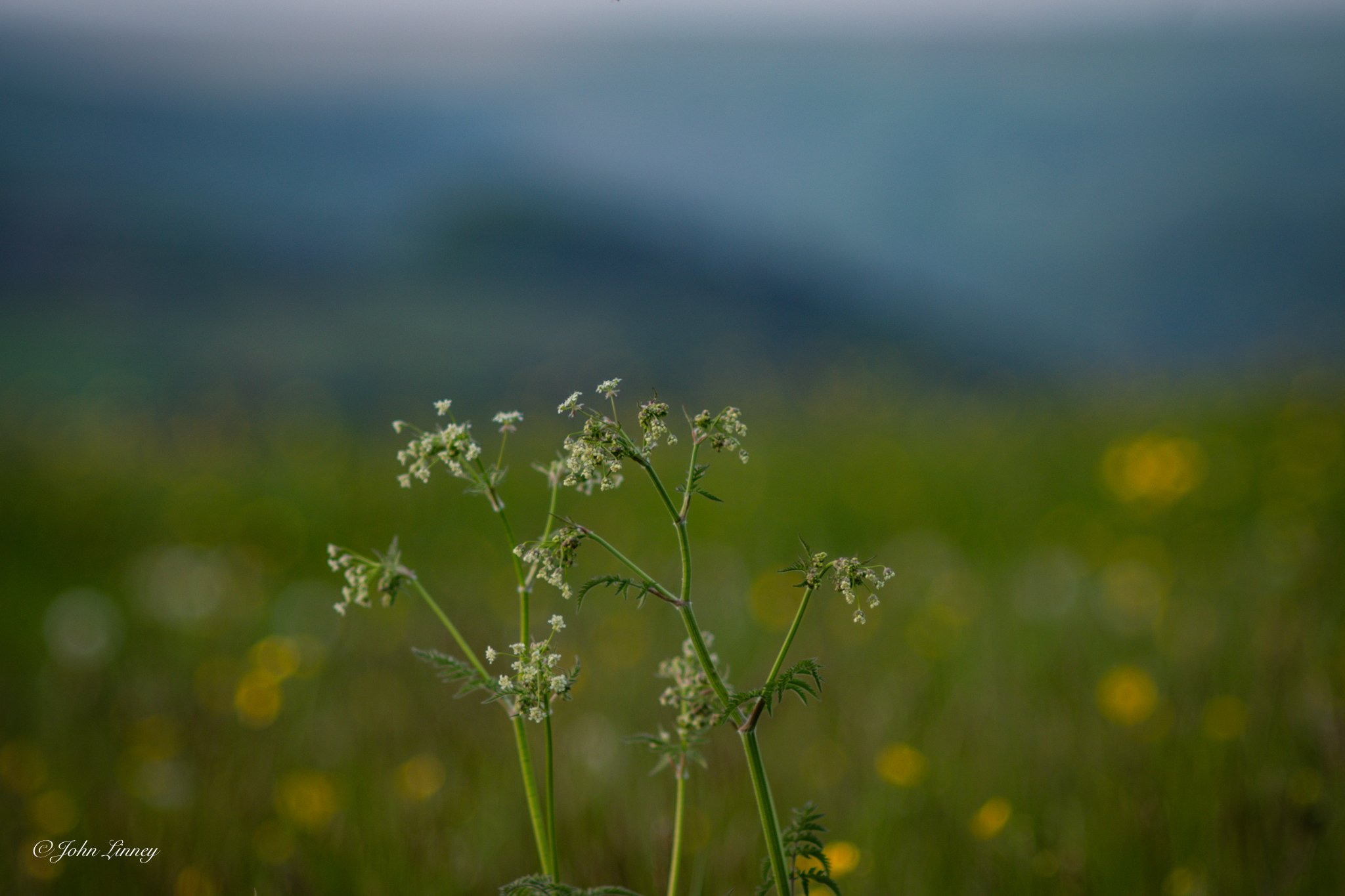
All the images on this post are made with the Pentax K70 and various lenses. It is a joy to use, reliable and with great image reproduction. My main gear is as ever, evolving. I won’t be updating on any changes in gear as I would prefer my work to be judged on its creative merits rather than any fancy camera or lens. You see the world through the eyes of a photographer as you do with a painter, illustrator and in general, all artists. It is an interpretation of that world which the recipient is able to make a connection. Photography is as much of a valid art-form as any other. We as photographers, try to capture moments and produce our interpretation of that moment.

These images aren’t all the sharpest I could provide. The camera, lenses and photographer are all capable of producing pin sharp photos but I chose to not go for that. Summer isn’t always the sharpest season, in that light and nature are sometimes more of a feeling than an observation. A field of wildflowers with a hazy background can be as evocative as a clinically in focus photo of a flower, tree or landscape. Cloudless skies, strong shadows will make sharp images and I’m a fan of those ; but just because of that admiration, it doesn't exclude more subtle images. Maybe this is part of my creative evolution? I know I can do sharp, I choose not to do so.

The other thing I’ve noticed in the last week or so is how much green there is. All shades of green, some subtle, some vivid but there’s a lot of it. We endure winters where trees and shrubs are stripped of foliage, preserving their energy for surviving in cold, dark inhospitable conditions. These couple of months when trees come into full bloom are the greenest they will be. Later on in summer, the trees show signs of having too much of a good thing.

I like summer. I really like summer, it’s probably my favourite season partly because autumn follows on from summer. Autumn, with its oranges, yellows, browns is often thought of as the top landscape/nature photography season. So many Lightroom presets are created to help you find the perfect edit for your autumnal images. I get that, I understand the allure of those photos. I love capturing them, eating them, printing them. Summer however, is a great time to be out in nature. You wear less, you have longer days to work with. I am fair skinned and the sun likes me. I burn easily but these days, I learn to live with it and compensate for it. I really love observing hot sun from a shady spot. I get all the visual benefits of summer without the downsides of being out in full sun. Ultimately as creatives, we have to work with what’s available and within the confines of our environment and season. The start of summer is a good time for me and let’s hope it continues for the next few months!
Studio Session

I spent some time at my partners’ studio last week. Kate Boyce, is a painter based in Hebden Bridge who works in mixed media. It is a very particular style of work and she is a well known, long established artist. She and I wanted to do some studio work that not only showed in her studio but also some close ups of her handling the materials she uses to create her paintings.
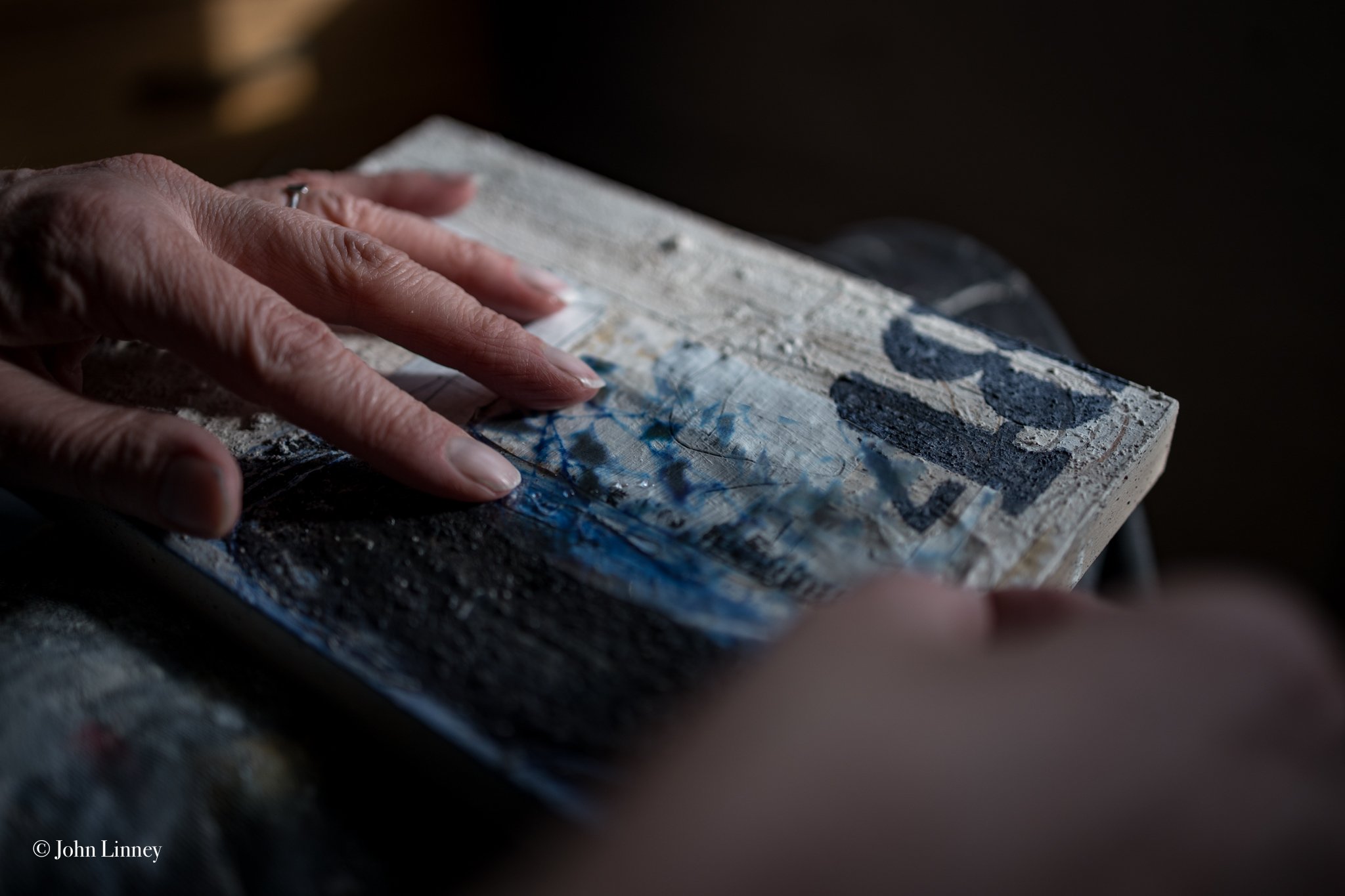
It was the first outing of my Canon RF 35mm f1.8 is sim macro lens (they do make long names for lenses!). First impressions are that it is a fabulous lens. I need to learn how to get the best out of it as do all photographers with new bits of kit. I wanted to focus on her hands manipulating the laser transfers she uses to add detail to her paintings. It’s an unusual process whereby she paints the background and some detail in acrylic before adding the transfer photos over the paint layer. it allows her to not only add detail but also a sort of texture by using small sections of foliage, trees and stone. I have a potential commission from another artist who has seen my work on social media. It will be my first of this type and hopefully not the last!

‘A journey of a thousand miles begins with a single step’ is the ancient Chinese proverb and it appears to be so in my case. It has taken me 40 years to arrive at that first step but it’s exciting too. I do plan to do some more studio work with local artists once I know I can replicate the results from the other day. I gave a talk a few weeks ago to photography group. Little by little, I am gradually picking up tiny bits of work. Hopefully, these will create momentum and increase sales of prints. It is incredibly tough to sell prints at the moment unless you’re a well established and highly visible photographer. It is tough for all creatives at the moment what with the fallout from Covid, the cost of living crisis in the UK and general financial insecurity. Art is seen as a luxury, an indulgence. I believe art is essential to help those who don’t create, have a little bit of joy in their lives. We work to not only pay bills but to obtain things that make our lives a little more bearable.

Wish me luck on my first assignment and I hope it is the first of many more!
Kates website is kateboyce.co.uk
Out of Hibernation

Winter tends to feel like a long season. Longer than others given the temperatures, the absence of daylight hours and the incessant rain. In winter, most plants go into a period of hibernation. We need these cold months to enable germination of seeds dropped from the previous year. They allow new growth to appear and carry on the cycle of life. Trees shed their leaves in autumn in order to prepare for the long cold winter months. They preserve their energy in order to resume when the temperatures increase and available light is more plentiful. Now I guess you probably all know these facts about the life cycle of plants.

People adjust to winter as well. We behave differently because of the weather and light conditions. Many photographers relish the low sun and the bare trees. I love taking photos in winter and not just of snow or frost. Spring is and always has been a welcome relief for me but a tricky season to take photos in. I love blossom. new growth, longer daylight hours but it is an unpredictable season. I feel as if I should be doing more, of feeling renewed but this doesn’t always follow. I’m a complex kind of guy, you could say contrary. I love photography and everything surrounding it. I have learned and hopefully improved over recent years but am left with the nagging feeling of having left it all a little late in life. This feeling won’t stop me pursuing my passion and career but it is as if I am playing catch up and to much younger photographers.

All the photos featured in this post are shot in or around Hebden Bridge. It has been my permanent home for a couple of years and it is a good place to live. The artistic community is vibrant and allows me the opportunity to join in with my work. Times are tough for freelance artists, makers, creatives at present. Finances are stretched and people are prioritising basic needs above art. I have an exhibition on at Old Town Post Office currently and I love showing my work to the general public. I could have sold more, have had more at my private viewing but I am grateful to Sarah for giving me the opportunity to show my work. I am participating in the town’s Open Studios this year and have another exhibition with my photographer friend Will booked for early September.

I see my current exhibition as part of my emergence from a creative hibernation. I should be out more often, taking photographs. I should be pushing my work and offering my professional services to small businesses. I should be doing all these things but I am not. That’s not to say I don’t intend to. I am in that place that most burgeoning professional artists find themselves of not quite believing it’s all worth it. The photography I love, the resultant prints look beautiful even if the images aren’t Magnum Photos calibre. I find it hard to say what type of photographer I actually am which is difficult in this age. We like pigeon holes, categories, niches to place people in. Customers, other creatives want to know what you are in one sentence. Long explanations can be pretentious or misleading. They give the listener/reader a sense of uncertainty in the artist or worse, a feeling that to be pigeon holed is to stifle their creativity.

When people ask what sort of photographer I am, I know what sort I am not more than what I am. There you see, he is being vague so he’s either pretentious or amateur. The best description I can come up with is an ‘outdoor and documentary photographer’. I remember trying to write mission statements in my previous career and struggling with it. I know I am not currently a studio portrait, full time landscape, sports, photojournalist photographer. I do all the bits left after those are taken up. Going back to hibernation and emerging from it; I guess I need to be more business like, more goal oriented. I need to set up future work, plan future projects. I just have to believe that striving will produce results. I am not alone in that I’m fully aware. I have no intention giving up and saving myself the effort. I have spent 40 years trying to find a job I love and I am not about to give up!
Mirror Or Not?

I’m an experienced chop and change merchant. I have extensive knowledge and experience of switching camera brands and systems. The only digital format I haven’t tried is medium format and that’s mainly because I can’t afford to. If someone gave me £10,000 to buy a camera system, I would seriously contemplate medium format. As it is, my budget is very limited. I rely on selling and trading to get the gear I use. About four months ago, I moved to Canon DSLR from micro four thirds Panasonicville. I wanted to rekindle a love of DSLR cameras and how they work. The Canon native glass is top notch, even the budget end 50mm f1.8 and 40mm f2.8. The autofocus and shutter systems are very quick. They don’t have IBIS but a few of the lenses have OIS so it’s there if you need to steady things.

I have spent the time since, using DSLR’s and mainly, loving them. There are a few drawbacks but on the whole, the shooting experience is very satisfying. I have mainly used mirrorless cameras in the past as I like to occasionally use vintage film lenses but the disadvantages of mirrorless are rarely talked about. The battery life is invariably worse, the start up time is slower and autofocus isn’t always as quick as with DSLRs. The camera world is nearly all mirrorless nowadays and the major brands (Canon and Nikon), have ceased to bring out new DSLR models or lenses. Everything is mirrorless with both having to create a whole new line of lenses to suit new mounts.

I recently sold one of my DSLR bodies to get a Canon EOS R mirrorless camera. It was the first full frame model Canon brought out and is a great starting point for them. it has its drawbacks but every camera I have ever owned had them. My dalliance with Leica full frame was great but not without its woes. I wanted to stay with Canon and have the ability (with an adapter), to use my existing EF glass. It connects flawlessly and works very well on the EOS R. Yes, the old problems with mirrorless are present on the EOS R but on the whole, I really like using it. I do think Canon have the best menu system of any manufacturer I have tried and it crosses over from DSLR to mirrorless, without missing a step.

My two camera system is now a Canon 6D Mark II and the EOS R. They are both lovely to use and similar in the quality of image they produce. I can’t decide as to which I will use for video work as the specs are similar. I have shied away
from looking at the R6, R5 or R6 II, as I’m not entirely sure I need IBIS as yet. Is the DSLR a dying breed of camera, probably? Are they irrelevant to today's photographers, no. The flagship Canon 1DX Mark III is an astonishing camera, that can often outperform most of the current Canon mirrorless cameras. It is far tougher and has a massive shutter life expectancy.
I know I have done these sort of gear centered reviews before and then gone and switched. I’m not telling you to go Canon or that I love them like no other. I haven’t ever explored the mysterious world of Sony full frame and there may come a day when I do. I do think using DSLR’s, is a very joyful thing and they are capable of producing stunning images, despite their ageing technology. As mentioned earlier, I do use old film lenses on occasions and we are talking 40-50 year old lenses. The images you can capture with these can be as good as any modern lens. Many filmmakers use vintage glass as they produce a more ‘filmic look’. Sharpness and precision are nice but not the be all and end all. Just because your camera is older than five years and may have a mirror, it doesn’t render it obsolete. Maybe there is a place for the continuance of DSLRs ? Maybe to harness what they do really well with what a modern mirrorless camera can achieve, is the way forward?

Capturing Clouds

If you ask most people what their idea of a perfect day is, they would invariably cite the fact that there ‘wasn’t a cloud in the sky’. Clear blue skies tend to cheer folks up, well apart from most photographers I know. A cloudless sky is one stripped of an important element, drama. That drama is often supplied by clouds. Whether they are the soft fluffy type, the dark moody type or the mackerel skies. Cloud inversions are even more sought after. That feeling you are floating above the clouds and distant landscapes peek through the clouds or are enveloped by them. Calderdale is a particularly good spot for cloud inversions as the valleys are very steep sided and cloud has a tendency to get trapped in them.

My photography tends to lean on the dark and moody side. I love dramatic atmospheres - mist, cloud, storm, the more oppressive or cloudy, the better. Maybe it's because I haven’t come to grips with shooting in very sunny conditions, or I just don’t use ND filters enough/properly. Maybe it is because it is a reflection of my general mood. I have a dark brooding personality that is best expressed through my photography. From the moment I started to take photography more seriously, I favoured dark, de-saturated images. I thought and indeed still do think, a light blue/grey tone to my photography works better for me. Clouds and cloud inversions really lend themselves to this colour palette.

We do good skies in Yorkshire. We have big landscapes with height and valleys. This can be a problem to capture the grandeur of the landscape but I still try. There sometimes isn’t a foreground, just plenty of middle and background. It is how you present this type of view. I have used 2:1 or 16:9 crops lately to express a sense of scale to my photos. I find it a good way of showing off just how open and uninterrupted the scenery is.
There is a local campaign to stop a proposed windfarm of 65, 200m high wind turbines on the moors between upper Calderdale and the moors above Top Withens near Haworth. This would have a devastating effect on the upland moorland ecosystem as well as drastically affecting the landscape of this area. To say it is overkill is an understatement! We are used to wind turbines in Calderdale but on a smaller scale. Clumps of up to ten moderately sized turbines, can just about sit comfortably with the surroundings but this proposal is huge both in the size of the turbines and the number they wish to put in place. The big skies would be peppered with massive structures, looming like giants over the peat bogs and rocky outcrops. It would be dramatic but rather more in the way Tolkien painted nightmarish visions of the landscape once Isengard fell to Saruman.

I didn't intend this to be a campaigning blog post about the wind farm proposal, it is about why I love clouds.Maybe it is their ethereal qualities, their mystical properties, of how they change the landscape for the better. I am writing this on damp grey Sunday morning. It doesn’t feel very inspirational weather today. The sky is light grey with little or no cloud definition at all. I do try in every light or weather to get photos. I do work for my craft but I just don’t crave clear blue skies any more. Good luck to you if you do and I hope they lift your spirits. Mine aren’t deflated by blue skies but just throw in a few clouds to make them more interesting.

Dales Landscape

Every few months, my partner needs to deliver or collect artwork from a gallery in Settle, North Yorkshire. We try to combine the day with half decent weather so I can take a few photos along the way. It’s been a bit grim up north since January, with only a few decent standout days for dry weather. Clouds I like, dark moody skies are excellent. I am ok with very sunny as long as I can find ways round the glare. Wednesday was a very sunny dry day. I am no landscape photographer and do not relish standing in a dramatic landscape in subzero temperatures or torrential rain. I just want to be able to capture some images without too much inconvenience.

I discovered a back road from Grassington to Settle. It’s probably well known but I have never travelled that way so therefore, I discovered it. I took my Canon 6D with me plus a couple of lenses. It is a pleasure to use older technology that can still deliver good quality images. It doens’t have many bells or whistles but I don’t mind. In some ways, I prefer a simple efficient tool to do the job. My GH5 II has loads of tricks up its sleeve but you always feel as if you’re fighting to keep up with what it is capable of. Like an eternal quest for knowledge that you will never quite master. To some, this array of specs is enough to convince you that it is the camera for you. Maybe it is an age thing but increasingly, this only manages to baffle me rather than help. The joy of being out the other day with my 6D was that the basics were what mattered rather than what my camera could do. I know I have barely scratched the surface of what a 12 year old DSLR is capable of and yet it doesn't shout out to you. I was allowed to take in the wonderful landscape of the Yorkshire Dales.

I was born in Yorkshire but grew up in Kent. I have lived back here for 36 years this year and it was only when I moved back, did I really find the wild places the combined counties have to offer. The Dales are a captivating mixture of dramatic rocky hills and farmland. Man’s hand is rarely absent from this landscape. It has been farmed, mined, quarried and lived in for thousands of years. Great viaducts such as the one at Ribblehead, span a broad head to a valley. It became as iconic as the highest of the three peaks, Whernside. I don’t spend enough time in the Dales and would drive through to get to the Lake District. I live in Calderdale which has its share of drama but in an even bleaker fashion. Its moors seem almost more inhospitable but it lacks the rising limestone karst scenery that the Dales possesses.

I enjoyed stopping to see the landscape, to feel less pressure to take the perfect shot. I have and am very guilty of putting too much pressure on myself to produce stunning images most of the time. I know I will fall short and yet I don’t stop to think that I shouldn’t be piling that level of expectation on myself. I am not at the level of those I truly admire but I feel as if I have gone a way down the road towards them. I am training myself to enjoy what’s around me and be more considered when taking photographs. I set my camera up and try to capture what I see and how it could look in the finished image/print. It is good advice to spend time wandering around before you take the photo. Take in the possibilities and look at the possible variations before you press the shutter button. That way, you learn to appreciate what you are taking a photo of.

Joy In Simplicity.

I had an epiphany a couple of weeks ago. No, I haven’t got religion or had a visitation from outer space. I realised something. What if I could have one system for landscape projects and video; and one for street, portrait and daily use? Simple really. The only problem is how do I get both without breaking the bank? The answer came to me one day. What if I slimmed down my micro four thirds set up and keep what I need for video & landscapes and go old school for my portrait, street and daily use. The solution started to become clearer. I put one of my micro four thirds cameras up for sale, sold a lens I wasn’t really using and bought a cheap full frame DSLR. My problem with full frame DSLR’s is the size and weight of them. Generally, the lenses are big and heavy. The bodies are invariably very big and heavy and I end up back in the situation I was in six months ago. I didn’t want to be lugging big bags of gear around with me and causing a recurrence of my neck and shoulder pain.

I searched, researched and found my solution. I went for the Canon 6D. Its a small, light, full frame DSLR with a respectable 20.2mp sensor. It is cheap as it’s getting on but built very solidly. I found one online with a 50mm f1.8 lens at a very good price. I bought the kit along with the highly rated Canon EF 40mm f2.8 pancake lens (also very cheap). I took possession of the items a few days ago. Ive only been out three times with this setup but what a revelation. The camera is very comfortable, lighter than my GH5II and a joy to use. I am a novice with DSLR’s and have much to learn but my first impressions are very favourable. I opted for a full frame because of the ability to work in low light. I also like the fact there isn’t any maths involved when working out the focal length of your lens. No crop factors or calculations as to what focal length your lens actually is. A 50mm lens is 50mm. Talking of the 50mm, it’s a lovely sharp lens. very light, very cheap and surprisingly capable. The 40mm is a sensation, super sharp and good in low light too.

I know the 6D has its haters. Only one card slot and not rugged enough for professionals. It’s solid enough for me and one card slot is fine as I’m not planning on doing any wedding or serious landscape photography with it. Even if I did decide to do those things, I’d just have a spare couple of sd cards in my bag. The whole kit was cheaper than what I am selling the Panasonic G9. I still have the GH5II and a few lenses. It is a brilliant camera and even better video camera. I am happy with that and what it can do. It feels more of a tool whereas the Canon 6D feels more of a joy to use. I carry the small Peak Design camera bag around with me just in case there’s a moment I want to capture. I might get myself a cheap 28mm to complete the set but it is simple, fast and pleasurable to use. The shutter is on silent mode but still sounds pleasantly reassuring. I am only a couple of hundred shots in with it but I feel already, this one is a keeper. If I fell on hard times and had to sell all my MFT gear, I would still have a brilliant, professional grade full frame camera to use, for fraction of the price of a modern full frame mirrorless system. The camera and two lenses weigh very little. Even if I added a 28mm, it would still be lighter than my GH5II with three lenses. It isn’t without its flaws and limitations but I don’t need perfect. I am a novice professional photographer that wants to get better at his art. I want to pick up a camera I don’t have to worry about being precious with and go and take photographs. I want it to be about creating, not accumulating gear.

Feeding The Beast

Why do you/we/I take photographs ? Is it a hobby, an opportunity to capture special family or personal moments? It could be any of those and they are valid reasons. You could be a photographer that is either a professional, semi professional or someone getting into professional photography. Your goal is to make your passion a career. Also, valid reasons. I have been most of these things in my time. I always found that taking photos of family and friends wasn’t enough to interest me. I liked taking images of urban scenes, of landscapes and seascapes even from an early age.
For the first 45 years of my life, I took photos, got the film processed and then kept the prints and negatives, only to show to those who had an interest in seeing them. I never shared them publicly because I didn’t think anyone would want to look at them. The digital age came along and social media was born and things began to change. We had phones that could capture, process and share images to a wider circle of people. Apps such as Facebook, Instagram and Twitter grew in importance. Suddenly, people were sharing not only their thoughts but images. Photographers of all levels began to see the opportunity to create an audience for their work.

I joined these social networks about 15 years ago (well at lest the ones that existed then) and shared the odd image. At this time, I wasn’t serious about photography but was a keen amateur. I gained followers and connections. They allowed me to show some of my photos and I got likes and positive comments. This confirmed that I must be doing something right so I shared more. I’m not entirely sure at what point did I begin to care about how many people liked my photos but trust me, it happened. I tailored my output according to how others responded to it. I gave the pubic what they wanted. Except, the public or more accurately, the social networks can be greedy. They require more regular content of a certain type to cater for your audience. I entered a vortex of connection/disconnection. I posted photos that I thought a larger number of people would like rather than ones I liked.

I got more serious about photography about 8 years ago. I decided to try to work harder at producing more professional images that would wow the followers/friends/likers. I bought kit that I thought would enable this transformation into a bigger hit on social media. Needless to say, it didn’t happen. In fact, it wasn’t until about three years ago, my social presence began to grow, thanks to the help of a dearly departed friend promoting my work. I was still feeding the beast though, looking at trends, colour palettes that were popular, compositions that got the most likes. I did stop to ask myself why I was doing this but not seriously enough for me to take a step back and reflect upon it. I certainly didn’t think to stop or start again. I post regularly on instagram and Threads. I share images I think others would like but nowadays, I also share them because I like them. I think I have a style and take photos that say as much about me as they do of the subject or composition. I’m not the greatest photographer and only passably half decent but I am working on it.

I think it is important to learn photography as both a skill and an art form. You need to learn how to use your gear, understand light, composition, and form. You need to work on creating your own style, first by studying others and secondly by adapting this knowledge to your own work. You may be a fan of Henri Cartier Bresson, Ansel Adams, Martin Parr or Joel Meyorwitz but use them merely as inspiration. Look at what makes their photos so captivating and try to see if you can put little bits of that inspiration into your work. Social media is a very fickle thing. You can be easily forgotten, overlooked. You can care too much about your social media presence. You can take a stand and only share work very occasionally and feel morally superior about it. You aren’t a slave to voracious appetite of the beast, demanding you post daily/twice daily hourly?! Instagram and Threads will pass you by and forget about you if you don’t post. Hopefully, one day, people will know my work not just through Instagram. This website showcases some of my work and some is available to be purchased as prints. I do intend to have a YouTube channel at some point this year and hope it will get a few views. I now take photos because I want to and because I love doing so. I feel my work is good and I have a professional presence. I post daily on Instagram but it is the photos I am proud of and want to share. I don’t care as much about trends because I am teaching myself to care more about the photos I take. I still feed the beast but I don’t care as much if it isn’t what people want to see. It is what I want them to see, to let them see the world through my eyes. After all, isn’t that what all photography is about ?

One Camera - Maybe More Than One Lens?

New Year, new challenges. If I’m honest, I feel as if my photography has been a bit stuck of late. It’s not that I’m unhappy with the results but just that it isn’t progressing as upwardly as I would like. You often imagine that progress is gradual but consistent state. I realise from the benefit or misfortune of being nearly 60, that life very rarely goes in an upwardly straight projection. My kit is absolutely perfect for my photography. I have a small collection of stellar lenses and two brilliant hybrid camera bodies so I do not excuse myself on account of not being ably equipped. I had my first exhibition last September which went very well. I launched my website around the same time and am fairly pleased with the look and function of it. I have asked others who are in both photography and the creative arts as to how I could structure my website to increase traffic and sales of prints. I now have an idea as to how I can do this.

I’m also pleased with how my photographs are turning out. I see a shift in style and mood with my recent work and like how this shows some progression. The title of the post is however related to the challenge that is popular with many photographers ; namely the ‘One Camera, One Lens’. The principle behind this is to focus the photographer on improving their composition skills by requiring them work the scene more. Having a fixed focal length can be seen as a hindrance by some. Conversely, having a single focal length makes the photographer look at the scene more critically and maybe focus aspects of it rather than trying include everything in it. One of my favourite You Tube channels is that of James Popsys. He talks in one of his videos about the best advice he was given when starting out in Photography. He was told by a very experienced landscape photographer, to think of a scene as a jigsaw. To not look at the entirety of the scene as a completed one but to decide whether the component parts of that scene work sufficiently well to produce a coherent image. Having a single focal length can enable the photographer to concentrate on maybe one or two elements by virtue of the self imposed restrictions placed upon them. I do sometimes think my images can be too busy, too many elements. The skill of an artist can often be what you leave out rather than include.

I do however have a problem with using just one lens. I see why it is a good exercise but I also see the merits of having two ways of approaching a scene by using two focal lengths. I have sufficient experience to know that using one lens in certain circumstances, can be a bit like cutting your nose off to spite your face. I have two excellent Leica/Panasonic collaboration prime lenses - a 25mm f1.4 and 15mm f1.7. These give you the full frame equivalent focal lengths of 50 and 30mm respectively. The wider lens allows more of the scene to be included whereas the longer focal length is a standard length. The wider lens enables the photographer to give more context to the subject even if the shot includes maybe too many elements. The skill in this case is to manage how you contain the number of elements while increasing the context. The longer focal length reduces the extent of the scene but enables the focus to be specific. 50mm is not an uncommon focal length for portrait work which does allow a little scene to appear. In truth, I like both focal lengths. I may only take out one of those lenses as part of a two or three lens kit. This doesn’t mean I don’t enjoy using the other but I make a determination as to what the particular assignment requires.

In short, I do think it a worthwhile challenge but I am not a sufficiently experienced professional photographer, to artificially restrict my workflow by choosing only one focal length. For instance, yesterday, every shot I took on my Panasonic GH5ii was with the 35-100mm f2.8 lens. They were either at 35 or 100. I chose that lens because the images I wanted required that flexibility. I was very happy with the results and enjoyed working the compositions using that one lens. If I had used just 25mm lens, I would not have been able to get the images I specifically wanted. One day when i’m rich and famous, I will spend a year shooting exclusively with my Leica rangefinder and the best 50mm Leica lens I can afford. I will justify it as a need to return to improving compositions skills. Until that day, I still need the options my excellent kit allow me!
Getting to Grips

I got a new eyecup for my G9 today. Cheap as chips, a genuine Panasonic one courtesy of the lovely peeps at Wex. It is transformative as it makes the use of the viewfinder so much more comfortable. I’m beginning to really enjoy using the G9. I am wondering why I slogged on with various full frame cameras, all getting increasingly heavy. This camera is more than capable of helping me produce the type of photos I love taking. I’ve sold some gear over the Christmas period and am awaiting a used GX9 to compliment my G9. I also have received a Panasonic Leica Summilux 15mm f1.7 lens today to complete my lens collection. I can get all of my lenses and camera in one bag and it’s still lighter than a full frame body with attached lens and two other lenses. It makes carrying a camera a joy again. I’ve gone for the GX9 as a sort of replacement for the Ricoh GRIIIX. It means I can have a small, discreet camera but I can also carry a couple of other lenses in a small bag and it not feel cumbersome.

This time of year is often seen as an opportunity to reflect on the past year and plan for the next one. It has been a turbulent one photographically, what with all the changes I’ve made in gear. On a personal level, it has also been difficult. I lost my mum in June this year which was very sad. She had lived a long life and died peacefully with her family around her. I also have two new grandsons who are both adorable; this seems to often coincide with the loss of older family members. As I approach the dying embers of 2023, what have I learned? Firstly, the best camera you own, is the one you have with you. I know this is a well known saying in the photography world but it is very true. I have realised, creating art through photography doesn’t require the top spec, full frame gear with all the bells and whistles. Having a kit that is portable, functional and understandable is more important. I love the Panasonic menu systems, the ability to be able to shoot both stills and video to a very high standard and yet be light, tactile and reliable, are reassuring.

So what next for 2024? I plan to get out to some new locations and really work on creating more professional, more interesting photographs. We hope to be moving house at some point this year. Ideally, we hope to move to the coast, to build a new life by the sea. I have a deep affinity with the sea even though, I’m no sailor, fisherman or have any family connections. I don’t necessarily want to focus on coastline or seascapes but having it on the doorstep would be a massive bonus. It is more about the feeling one experiences stood on a beach, a clifftop, a harbour. Being next to an immense force of nature is humbling. I will miss living amongst the Pennine moorland but we need a change. My aspiration is to learn how to get the best out the kit I have. I also want to grow my fledgling professional photography, to sell more proficiently through this website and to offer my services as an outdoors photographer to any potential clients.

I need to get fitter, to be less impulsive, take my time over photographs, not rush the process. The photographer Chris Orange, a constant source of inspiration to me, has moved away from digital cameras for his landscape work and gone to medium format film. It isn’t a new experience for him but he’s decided to shoot film for his landscape work as it enables him to enjoy the creative process and slow down more. I too have shot film over the years but never with a serious professional grade camera. I rushed using compact 35mm film cameras so almost conversely, I now take my time far more using professional level digital! Thank you for being with me in 2023. I wish you all a very Happy New Year and hope 2024 is a peaceful and productive one for you.
Ishimoto Blog:
Integer posuere erat a ante venenatis dapibus posuere velit aliquet. Fusce dapibus, tellus ac cursus commodo, tortor mauris condimentum nibh, ut fermentum massa justo sit amet risus.